
The Future of Rail Freight: the Rise of the Internet of Things and Digitalisation
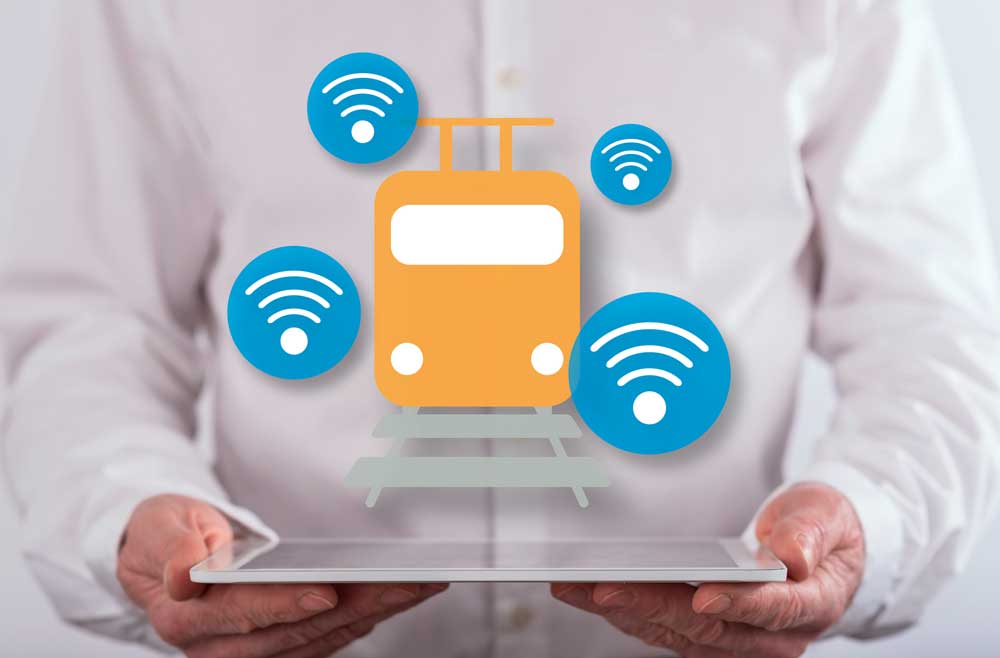
Rail freight transport is undergoing a major transformation, driven by significant investments in the digitalisation of operations.
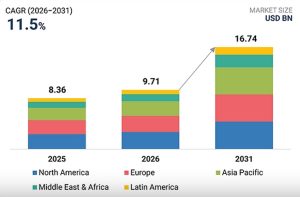
– The global rail telematics market is driven by the growing demand for efficient, safe, and cost-effective transportation systems.
The expansion is driven by the advancement of digitalization and integration of IoT technologies with an emphasis on real-time data analytics for predictive maintenance, says Adhish Luitel, Principal Analyst, ABI Research.
While Europe has made significant progress in the deployment of IoT, North America is still underdeveloped. According to ABI Research the region has a Total Addressable Market (TAM) of almost 2 million railcars, which offers significant opportunities for IoT-based solutions.
The role of IoT in railways
IoT technologies are transforming freight rail operations by integrating sensors, AI-based analytics, and cloud computing into everyday logistics. Smart train cars equipped with GPS, vibration sensors and automated reporting mechanisms can now send real-time data to operational control centres.
This connection allows operators to monitor location, freight condition and potential maintenance problems, ensuring maximum efficiency and safety throughout the transport process.
Predictive maintenance
Predictive maintenance is one of the most revolutionary aspects of IoT in rail freight. By analysing data collected in real-time from train wagons and infrastructure, AI algorithms can predict failures before they happen.
This reduces downtime, prevents costly disruptions, and improves safety by ensuring that potential mechanical problems are resolved proactively.
Replacing many manual tasks
Traditionally, machine vision and sensor-based inspection equipment, often installed at railway crossings, has been at the forefront of improving operational visibility.
Rail brake inspections are also a critical but time-consuming task. These inspections ensure that the air brake system is functioning correctly throughout the train, which can be more than a mile long. Manual checks require extensive coordination between train crews and control centres, which can cause delays and inefficiencies.
IoT technologies offer a solution by providing real-time data and predictive analytics, ultimately improving safety, reducing downtime, and improving compliance.
Challenges of integration
The deployment of IoT on freight railways faces a number of challenges. In North America, for example, the adoption of IoT-based visibility solutions has been slow compared to Europe, largely due to the extensive infrastructure and the different regulatory environments in different states and countries. In addition, integrating legacy rail systems into modern IoT frameworks requires significant investments in hardware, software, and training.
Security is another growing concern. As more and more train cars are connected, cybersecurity risks will increase, making it important for operators to put in place robust security measures. Strong encryption, real-time threat monitoring and compliance with industry security standards are essential for the successful digital transformation of the industry.
”AI algorithms can predict failures before they happen.”
”The deployment of IoT on freight railways faces a number of challenges.”
Trilogical Technologies: telematics solutions for long freight trains
As freight demand increases, rail operators are moving to longer trains, particularly in North America. Around half of freight trains are now over 1.65 km long, and this growth is continuing.
Trilogical Technologies presented its own technology at InnoTrans 2024. The company has developed the Long-Train Intelligence System (LTIS® ) to manage the complexity of longer trains by integrating real-time control systems that improve safety and efficiency. Key features of the system include:
Continuous Train Integrity: monitors wagon placement from start to finish and ensures train integrity during transport.
Driver Advisory System: provides drivers with status updates and alerts to prevent operational delays.
Condition monitoring: Uses sensors to detect anomalies and reacts quickly to avoid disruptions.
Condition monitoring and predictive maintenance: Supports predictive maintenance strategies that is estimated to reduce costs.
Hitachi Rail, Connected Places Catapult Announce AI Rail Maintenance Tech
In 2021, Connected Places Catapult (CPC) initiated a technical collaboration that brought together Hitachi Rail, LNER, and Network Rail. The collaboration led to a successful six-month trial on the East Coast Main Line, testing Hitachi’s technology.
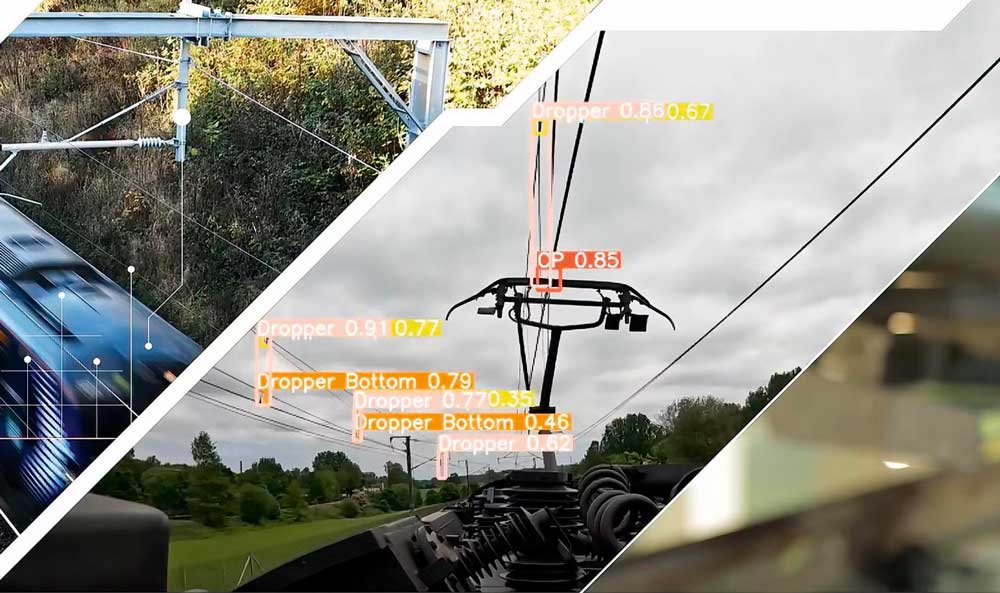
The digital overhead line monitoring technology, which Hitachi unveiled at the latest InnoTrans in Berlin, promises to boost punctuality for passengers and improve safety for trackside engineers.
CPC played a pivotal role in supporting the partnership, focusing on understanding user needs and fostering new collaborative working models, thus navigating the challenging “valley of death” in technology innovation.
The project involved mounting cameras on trains to monitor overhead lines in real-time, with machine learning algorithms identifying potential faults to inform maintenance needs.
– The UK’s railway ecosystem has an important part to play in the development of this technology, which is now available to infrastructure operators worldwide, said Hitachi Rail IM and Digital Services Manager Ben Earle.
Following the trial, Hitachi Rail has refined the product, integrating it into its HMAX digital asset monitoring platform.
HMAX, Hitachi Rail’s digital asset management suite, enhances the management of railways by seamlessly integrating operational data from across railway assets and infrastructure into a single platform, optimising the utilisation of railway systems and associated resources. In addition to providing live time monitoring, the system enables the virtual simulation of the physical environment, accelerating the evolution of railway systems.
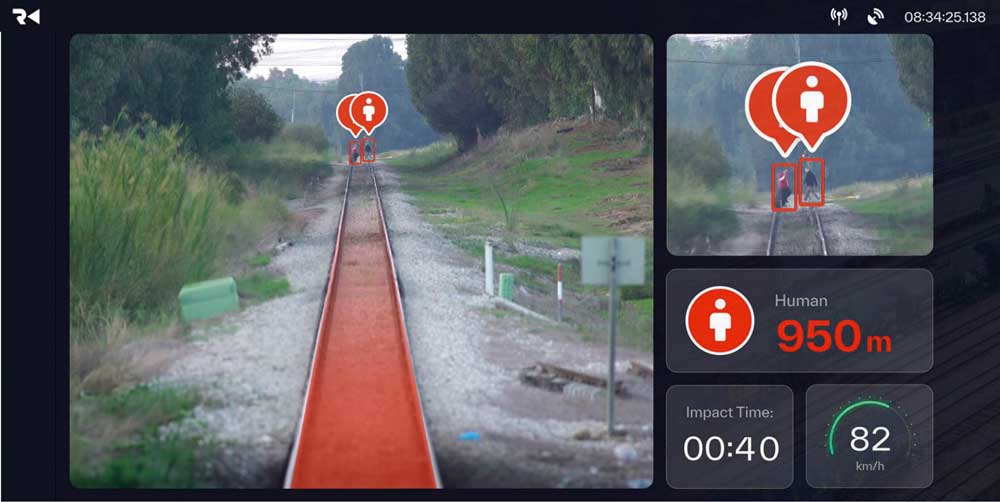
Rail Vision: AI-powered Object Detection for Rail Safety



Subscribe to the free Maintworld newsletter here!